Our Approach · 教育理念
From research to the exhibition wall
从研究到展墙
Students do not only hear about culture. They research it, learn it with their hands beside the people who still practise it, compare it with traditions elsewhere, and present what they found.
学生不只是“听说”文化:他们研究它,跟着仍在做这件事的人亲手学习,把它与其他文化的传统作比较,再把自己的发现呈现出来。
The teaching path · 教学路径
Four stages
四个阶段
STAGE I
Discover & Question
发现与提问
Meet a living craft, consider cultural identity, observe closely and form research questions.
走近一门活态技艺,思考文化身份,仔细观察并提出研究问题。
STAGE II
Research & Make
研究与制作
Study a case, learn from practitioners in workshops and interviews, and document ethically.
深入个案,在工作坊与访谈中向实践者学习,并负责任地记录。
STAGE III
Compare & Curate
比较与策展
Compare traditions across cultures with evidence, then shape an exhibition theme and interpretation.
以证据比较不同文化的传统,形成展览主题与诠释。
STAGE IV
Exhibit & Reflect
展示与反思
Present work to an audience, explain creative decisions and reflect on the learning process.
面向观众展示成果、解释创作选择,并反思整个学习过程。

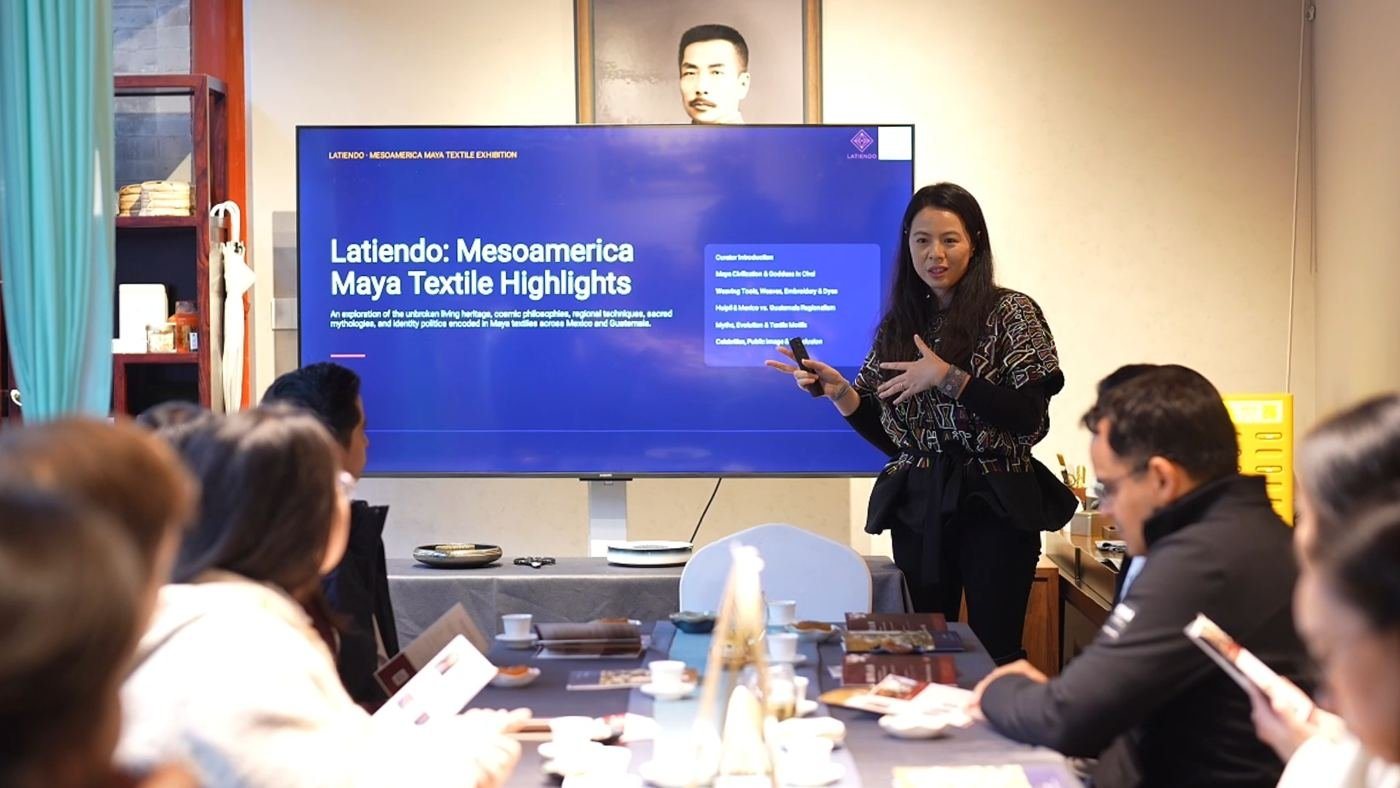
A question we teach with · 课堂上的一个问题
Why do two places so far apart weave the same diamond?
两片相隔万里的土地,为什么会织出相似的菱形?
Zhuang brocade set beside the weaving of the Americas, compared by pattern, craft and memory.
壮锦与美洲编织并置,从纹样、工艺、记忆三个角度比较。
Why we teach this way · 我们为什么这样教
Three principles
三条原则
I
Learning from one teacher, over time
师徒制
Most heritage crafts were never fully written down. They were passed on by watching a teacher’s hands, trying, and being corrected, often for years. Zhang Yanya studied with Lin Xiaozhen for seven years before she was allowed to teach. So we build our programmes around one teacher and a group of students who keep coming back.
大多数非遗手艺没有被完整写下来,靠的是看老师的手、自己上手、再被纠正,往往要好几年。张艳亚跟林晓真老师学了七年,才被允许教课。所以我们的课程围绕一位老师和一群会一直回来的学生来设计。
II
Going to where the craft lives
田野
A craft is easier to understand in the place it comes from. Fuding white tea is withered in the sun and wind of Fuding; Li-style Taiji comes from Wuqing in Tianjin. So we take students to the tea hills, the teacher’s studio, the town where a technique began.
手艺放回它出生的地方,更容易看懂。福鼎白茶在福鼎的日光和风里萎凋,李式太极出自天津武清。所以我们带学生去茶山、老师的工作室、手艺起源的地方。
III
Why we avoid one-off workshops
不做一次性体验
A single workshop is pleasant and easy to sell, but it rarely changes much. A relationship that repeats works differently: the student improves, the teacher has someone to pass the work on to. A conversation at Tianzhen Garden left us with a rule we still use: build a mechanism, not a channel.
一次性的体验课好卖,但很少真正改变什么。能反复进行的师徒关系不同:学生会进步,老师有人可传。天真园的一次座谈留给我们一条至今仍在用的原则:做机制,不做通道。
How learning is supported · 学习如何被支持
Intention, process, evidence
目标、过程、证据
EDUCATIONAL INTENTION
教育目标
What learners need to understand, investigate and develop.
学习者需要理解什么、研究什么、发展什么能力。
LEARNING PROCESS
学习过程
How research, material experimentation, cultural comparison and curation support learning.
如何运用研究、材料实验、文化比较与策展实现学习。
EVIDENCE OF LEARNING
学习证据
Student work, research records, exhibitions, teacher feedback and learning portfolios.
透过作品、研究记录、展示、教师反馈与学习档案评估成果。
Beyond the school term · 学期之外
0–10,000 Hours
For students who want to continue after the term: a lifelong learning log in which they record their practice, research and creative work over time.
「0–10,000 小时」:一份终身学习记录,学生长期记录自己的实践、研究与创作。
See how it fits your school
看看如何适合贵校
Programme structure, outcomes and delivery details are on the Programmes pages.
课程结构、学习成果与实施方式,请见课程项目页面。